Qi Magazine - Issue 85 (December 2007)
Michael Tse
Meditation is very important for good health. No one can be really healthy if they cannot shut down their minds and be calm and relaxed. Many problems and illnesses begin with stress and tension. If you watch the behaviour of someone who is stressed and under tension, you will see that they are always active and cannot sit or stand still.
Even when people have some personal leisure time they listen to music and are doing things all the time. They are like a machine that is always being used and never turned off. Obviously it will eventually break down, so how can someone like that not become ill? Nowadays people do not understand that calmness and relaxation are important. Most people think that in their spare time they can listen to music, read the newspaper, do the crossword or Sudoku puzzle or watch TV and that these things will help them to relax and recharge their energy after a hard day’s work. This is wrong.
Three thousand years ago in China and India people already discovered the secret and method for longevity. It is all based on the senses, sight, hearing, smell, taste and touch. All these senses use a lot of energy, so if we want to live longer we must learn how to shut them down. The method to do this is meditation.
Eye Sense
Whenever we use our eyes, either for watching TV, reading a book or playing agame, we are using energy. The longer we do it the more tired we will become and the older we will look. If you look at highly academic people like university professors, they spend a lot of time researching and reading from books or are working on the computer. They use so much energy and in the end they look tired and older. However, their hard work is for a purpose and brings them success, so for them, it is worth it. Nowadays, though, people will spend hours and hours on the internet for fun or looking up useless information and the energy they use is just wasted.
Hearing Sense
Our hearing also uses energy, although it is not as must as your eyesight. Over-using our hearing can damage the kidneys as in Chinese medicine the kidneys are related to the ears. Today people listen to loud music all the time, so you can imagine how damaged their hearing gets.When they are older they will definitely need a hearing aid and I feel sad for them. Also it means that these people need excitement, something to stimulate them. Without this excitement they find life boring. This is also sad. We should not be partying all the time as this will damage our heart by making it beat too fast. If this is the case, then we cannot be healthy because we cannot sit down and be calm. Then we will continually lose our Qi all the time.
Aside from this, when they are older, people will have to talk loudly to them. Then they will complain that their hearing is weak all because they have damaged it with overuse when they were younger.
Smell Sense
The sense of smell also has a big effect on the body. Many people like to smell nice fragrant scents. However, we can also over–use oursense of smell . If we surround ourselves all the time with pleasant, strong smells, then some of us can lose our sense of smell so that we cannot smell the scent of a simple flower. This is because we have over-stimulated our senses and this makes us feel under stress and hyper-active. Then our sense of smell becomes weak. If we can calm down and relax, then the sense of smell can come back. Our sense of smell is very important. Everything around us has a different smell:- our homes, our offices and even the country we live in has a different smell. A good smell means that the energy in that area is good. If the smell is bad then obviously the energy is bad. This can cause the people who live or work there to be healthy or unhealthy depending on whether it is good or bad energy. It also affects their luck.
Today many people talk about Feng Shui, but most of the time they only talk about or know very low-level knowledge.They only talk about external decoration but how many really understand the internal things and the energy of Feng Shui? Smell plays a big part, so we should not overuse our sense ofsmell. The more perfume we use the more our sense of smell will decline.
Taste Sense
We use our tongue to taste food. People love tasty food and many people enjoy sweets and candy. However, this is not good for the body. What we eat plays a big part in our health. In Chinese medicine we also relate to our internal organs and sour relates to the liver, bitter relates to the heart, sweet relates to the spleen, spicy relates to the lungs and salty relates to the kidneys.
Other tastes are a mixture of these five. If we only like food with one of these tastes or hate certain other tastes, then this can cause an imbalance. For example, sweet tastes are good for the spleen, but the spleen is also related to the stomach and and so if we take a lot of sweet then it will affect the stomach and if we take just a little, then it can be good for the stomach. Anything we overdo can cause a problem. Anything too strong will have an effect and weaken something else. So we should not just concentrate on certain tastes but try and take all kinds but not in excess. Sometimes we do not like bitter tastes but we should still take some.
Most people who live longer lives eat very simply and do not eat unusual food or very highly nutritious food. This minimises the amount they need to use their taste buds and so it does not exhaust the internal organs.
Touch Sense
The sense of touch is also very important. Many people like the feel of fine fabrics, like silks and linens. Also people like the feel of wood in good furniture like beds and tables. This sense excites the mind so that it cannot be calm. This contact stimulates the nerves and sometimes these can be overused, especially if we over-indulge ourselves. This too means we will lose Qi.
To save our Qi we should keep our sense of touch or feeling calm and then our Qi can settle back to the Dantian. We should not let our Qi run around our body too vigorously. In order to save Qi we must let it settle and calm down, as if nothing has happened to the body. Although everything in the body is still functioning, the heart is still beating and we are still breathing, we should slow things as much as possible.
Four Postures of Meditation
Remember, meditation is not about moving the Qi. Physical movement helps us to circulate the Qi, to use our Qi in the right way and get rid of negative Qi. During meditation we should shut down the five senses so we can settle and collect more Qi. This increases our longevity.
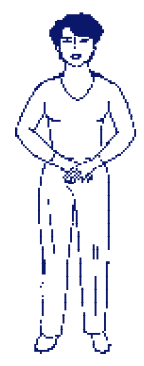
For practising meditation there are four postures: One is standing and we call this Zhan Zhuang, the second way is sitting in a chair, the third is sitting in lotusposition, which, in Chinese, we call Pan Xi. The fourth method is lying down, which we call ErGong. Standing, sitting and lying are all different physically but all have the same principle which is to settle the Qi and store it in the Dantian.
Zhan Zhuang
When we do Zhan Zhuang there are different levels:- high position, middle position and a low position. Lower is more difficult and higher is easier.When we stand in a lower stance we call this Ma Bo Zhan, which means horse stance standing position. This demands a lot of leg strength and so it is not easy to do for long. However, nomatter which position we choose to stand in, we need to keep the body in a line. The top of the head at the Bai Hui pointshould be vertically in line with the Yongquan points on thesoles of the feet.
In the high and middle positions the Huiyin point between the legs also lines up with the Baihui point. This we can see if we check our posture from the side. About the hands,we can hold these in various positions and use different gestures, such as at the Middle Dantian or the Lower Dantian.These areas connect with the areas of the Qi. Different gestures involve the palms and the Laogong Points or the shape of the fingers and this directs the Qi to go a different way at first.However, if we stay for long enough, then the feeling is thesame for all of them. The will be Qi is strong and runs all overthe body following the proper channels.
In the low position we should try and keep the thighsparallel to the ground. In this position the Huiyin point will notline up with the Baihui and Yongquan. This low stance willdevelop the lower legs more, particularly the calves. The feetshould be shoulder width apart, the eyes should be open, but not focused. We should keep the mouth closed naturally andbreathe in and out through the nose.
Generally, when we practise the low stance we will notstay for too long and when we are tired we should stand upand change to a mid or high position. When we feel strongagain we can go back down again. So we can repeat low, highand middle stance for quite a long time. Generally, peoplecan stand one to two minutes in the low posture and somemore senior students five to seven minutes. The low stancewill not make you heavy and stiff but actually the opposite, asit makes you feel lighter. In Chinese we say, “Light Gong (XingGong) training is based on heavy training.” This standing exercise can also help a lot of leg and knee problems.
The height of the middle position can vary, but the Baihui, Huiyin and Yongquan points must line up vertically together. The feet can be wider than the shoulders. The eyes and breathing are the same as in the low position. The eyes must be open because in this exercise there is a lot of Qi that needs to be released out through them. We do not focus so it means we are not using our eyes to see. Again, the hand positions and gestures can vary, for example, Laogong points facing each other or facing the ground, etc. It has the same meaning as the low stance.
Sitting Meditation
When meditating sitting on a chair, we should not lean back against the back of the chair like we do when watching TV. We should sit forward towards the edge of the chair and inthis way we minimise how much contact we have with thechair. There are many ways and gestures we can use for thehands. You might just place your hands on your thighs so that the Laogong points touch the Liangqiu points or form a hand gesture which is also fine. The feet should rest on the floor and the knees and toes should line up vertically, but the feet must be flat on the floor.
Lying Meditation
The last way of meditation is lying down. The most common way is to lie on your back and rest your hands on your Dantian, this means that the Laogong points cover the Dantian. The head should be raised up a little using a pillowso that the head is higher the feet. This allows the Qi toflow down to the Dantian and to the feet. The downside of this position is that it is easy to fall asleep, so generally I donot do much lying meditation. Another way is to lie on yourside and put one hand close to your head and the other hand on your thigh. This creates a Taiji symbol with the body.
All these four ways to do meditation are the same inthat they allow us to calm down, shut down our senses andstore our Qi. However, standing positions develop the bones and lotus position concentrates the Qi in the upper body more which is why the legs feel numb because the circulation ha sbeen blocked somewhat. In the end, no matter which one we do, we need to be patient and relax the body. The longer we can meditate the better we will get and the more we will enjoy its benefits in the future.