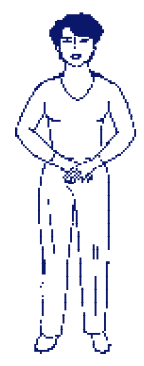
Stand. Relax. Breathe.
The natural alignment process of Standing Post is second to none: The dynamic practice cultivates wholesome power and physical equilibrium. The Mind and Breath methods cultivate Zheng Qi (true chi). Soft Qigong will transform not only your body but your entire way of life! The King of all Exercise, the Father of all Internal Kung Fu! For more information: MIT Qigong Webpage
Showing posts with label Qigong. Show all posts
Friday, January 19, 2018
Monday, January 15, 2018
Wednesday, April 20, 2016
Qigong Workshop at ZS Associates
ZSpace article on ZS Qigong
session
If you have
watched the computer-animated action comedy martial arts film called Kung Fu
Panda, you have probably heard of Qi (pronounced “CHEE”) and how Master Shifu uses “Qi” to create nerve-based attacks,
heal living beings and grow flora. Just this past week, ZSers at San Francisco
office had the firsthand opportunity to practice, cultivate and balance Qi at the
Qigong wellness session led by our own ZS manager, David Weingest.
With roots
in Chinese medicine, philosophy, and martial arts, Qigong (simplified Chinese: 气功) is an internal Chinese meditative exercise which
uses slow graceful movements and controlled breathing techniques to enhance a
practitioner's overall health. It has more than 10,000 styles, and 200 million
people practicing worldwide. It combines dynamic, static and meditation
practices that resemble yoga and tai-chi.
To kick-off
the Qigong session, David gave us a brief background about Qigong and how he
got involved back when he was in MIT. Then, we were divided into two rows to
give each other some rooms to open our arms outwards. First, David taught us
the most fundamental poses with controlled breathing techniques. This was
followed by a few other movements such as Low post, Turning cow, and Crane. My favorite one was the “Gathering Qi”. It is a movement where you
raise your arms outward and inhale to gather Qi, and exhale as you return your
arms back to dan tien (belly
button) to complete one full movement cycle. In our day and day busy work life
as consultants, this is such a simple internal exercise that can be done
anywhere whether it is at your workstation or hotel room. After completing a
few cycles of these movements to center mind and body, I could already feel the
serenity yet focused concentration – so ready to take on new challenges,
presentations and meetings!
We ended the
session with a series of “washing” movements, which is said to have the effect
to clean up the mind and wash the marrow. First we rubbed our hands together (to
build a little friction and warmth) and washed our face 3 times. This is
followed by rubbing (wash) your hands and patting the top and sides of your
head from front to back (also 3 times). Then we did the same washing and
patting steps to our legs. Lastly, David shared with us a few resources to
learn more about Qigong – 1) his archived blog at http://mitqigong.blogspot.com and 2) a book by Russell Simmons on the benefits of meditation. In the end, we didn’t heal living beings or grow
flora, the session was energizing and nourishing both physically and mentally!Monday, May 18, 2015
MIT Qigong Charity event for Nepal
Information:
Date: June 22, 2015
Time: 7:00-8:30
Where: Mass Institute of Technology, Cambridge MA.
Cost: Minimum Donation to Attend Session - $20.00
Donations: Any amount can be donated and is greatly appreciated!
NOTE: 100% of all donated money goes directly to the people of Nepal!
The people of Nepal need our help! MIT Qigong is teaming up with MIT Wellness & Park Ave Wellness to raise money for the people of Nepal. Most realize that the region was devastated by an earthquake and its aftershocks. Our last event raised $1200.00 for the Boston Children's Hospital and with your help I hope to raise enough money to make a positive impact on the lives of these good people.
Tuesday, May 20, 2014
Sunday, May 11, 2014
Grandmaster Fu Wei Zhong Seminar
This weekend members from the MIT Qigong Club attended a two day seminar with Grandmaster Fu Wei Zhong. Thanks to Coach Jim Roselando for organizing such an incredible event.
Master Fu Level 1 Seminar | Boston, MA | May 2014
Fu Wei Zhong biography taken from: http://www.emeiqigong.us/lineage/lineage/fu-wei-zhong.html
The future envisioned by Grandmaster Ju Zan centered on a
young man named Fu Wei Zhong who began his training on the day he was born in
1949. Driven by an exceptional interest in old texts, he began studying
traditional Chinese medicine and reading ancient Chinese philosophies when he
was only six years old. By the age of 12, Fu Wei Zhong was treating and healing
people with techniques he had learned from his reading and the instruction from
his grandfather, a traditional Chinese medical doctor and the emperor’s family
doctor.
He began his martial arts training in Shaolin
Gongfu at the age of seven. Several years later, he became a student of
Luo Xing Wu, an eminent Chinese martial arts grandmaster, from whom he
learned many martial arts disciplines, including Xingyi and Bagua Gongfu.
Like many other young people during the Chinese Cultural
Revolution, Fu Wei Zhong was sent to the northeast China Heilongjiang province.
Because of his training, he was asked to work on a collective farm as a
veterinarian. He was 18 years old when he arrived and opened a medical clinic.
For eight years, he used traditional Chinese medicinal herbs and treatment
techniques, including acupuncture and Chinese massage, to treat multitudes of
sick people and animals with great success.
Fu Wei Zhong returned to Beijing in 1976 and
taught martial arts at the Beijing Dongcheng District Martial Arts School for a
year. He planned to take a master’s degree in religion and was looking for a
renowned professor to guide him in the beginning. A friend, Liang Shu Ming,
said that he would take him to meet Abbot Ju Zan, the Supreme Abbot of Chinese
Buddhism and 12th Lineage Holder of Emei Qigong.
Fu Wei Zhong had had a recurring dream since childhood of a
monk who would change his life. He didn’t know who the monk was or why the
images were coming to him, but when he saw the face of the Abbot he recognized
him as the monk from his dreams. At their meeting, they looked at each other
and the Abbot said, “Oh, you’ve finally arrived, it’s time for you to train!”
as if they already knew each other.
Fu Wei Zhong was invited to join a distinguished group of
men and women chosen to undergo training and a selection process for
the position of 13th layman Lineage Holder of Emei Qigong.
After six months of intensive training and testing, Fu Wei
Zhong was selected by His Holiness, Grandmaster Ju Zan, to receive further
instruction in Buddhism, Daoism, traditional Chinese medicine, Taijiquan,
Qigong, Feng Shui, future prediction, and other Dharma methods exclusively
transmitted from one Lineage Holder to another within the Emei Qigong system.
During this time, Fu Wei Zhong was often in seclusion—studying, cultivating,
and integrating the system’s ancient texts into practical forms and
easy-to-read language that could be effectively taught to the public.
In 1984, the title of the 13th Lineage
Holder was bestowed on Fu Wei Zhong. He received the Emei Qigong sacred book
“The Emei Treasured Lotus Canon” and officially assumed the title of
Grandmaster as well as the responsibilities of being the Lineage Holder.
Grandmaster Ju Zan directed him to begin teaching publicly, “In order to end
the pain and suffering of the world and to allow Emei Qigong to bring out
humanity to shine like the sun.”
In the spring of 1985, Fu Wei Zhong began teaching Emei
Qigong healing techniques throughout China, thereby initiating a national
revitalization of the role of Qigong in Chinese medical theory and practice. In
1989, he went into seclusion again to meditate for three years so that he could
further develop Emei Qigong techniques so they could be more easily taught to
the public in our fast-paced modern society. It was during this period of
extended meditation that he was able to achieve the Qigong state necessary to
decode the sacred Emei Qigong skills. Fu Wei Zhong was able to decipher this
information and now teaches these skills in his lectures, seminars and
writings.
Grandmaster Fu believes that only by training thousands of
skilled Emei Qigong practitioners will it be possible to restore and preserve
the health of millions. He has personally treated, healed and helped thousands
of people—the rich and famous as well as orphans and patients considered
incurable. China’s late president Deng Xiao Ping was among those helped by Grandmaster
Fu. Using the methods of Emei Qigong cultivation, medical qigong and
traditional Chinese herbal medicine, Grandmaster Fu has successfully cured tens
of thousands of people who have come to him for healing.
At age 36, he was recognized as one of the most prominent
grandmasters of Qigong and Traditional Chinese Medicine. The Chinese have
dubbed him “Emei Wizard” and “China’s Medical Buddha," as well as deeming
him “The Father of Modern Medical Qigong.” In addition, Fu Wei Zhong has been
made lifetime president of two Qigong institutions: The International Medical
Qigong Academy and The Emei Linji International Qigong Medical Research
Institute, and he holds honorary positions and titles in more than 50
hospitals, medical colleges, Qigong clinics and Qigong associations in China.
Fu Wei Zhong is a learned scholar. Having read thousands of
books, both Chinese and foreign, he is well versed in the medical,
philosophical and theological theories of different schools, both Eastern and
Western. While studying, he took careful notes and wrote down his reflections,
which number over three million words. To date, he has published six books
and over twenty treatises in China.
Fu Wei Zhong immigrated to the United States in
1995. His goal was to disseminate Emei Qigong’s therapeutic techniques so that
its methods could be fused with contemporary western medical techniques. His
goal is to alleviate much of the suffering in today’s world. He is determined
to transmit the knowledge and skills of Emei Qigong to the American public.
Since his arrival in the United States, Grandmaster Fu
has given lectures and workshops in over 30 American cities. He was invited to
the University of San Francisco and the University of California at San
Diego to lecture on Qigong and was a visiting professor at the American College of
Traditional Chinese Medicine in San Francisco, where he taught
curriculum-required courses on the Emei methodology of Qi (energy) emission for
diagnosis and treatment. In 1996, he participated in an experiment at the Atlantic Tumor Hospital in California that
involved the emission of Qi into cancer cells. The initial positive results
enabled the experiment to be taken to a bigger scale. In 2001, these
encouraging results were published in the magazine, Spirituality and
Health.Fu Wei Zhong also participated in an experiment conducted by the
California Pacific Medical Center of Complementary Medicine Research Institute
to test Qigong and other holistic modalities in the treatment of brain tumors
from a distance. The Discovery Channel filmed Grandmaster Fu at theMedical Center and
aired the documentary in Canada on a show called “Daily Planet.”
As of 2006, there are many thousands of Emei Qigong students
in the United States and 2 million followers of Emei Qigong
worldwide. What the world needs now, more than ever, is a heart-centered system
like Emei Qigong to bring health, vitality and true kindness to people.
In the fall of 2006, Grandmaster Fu taught the Level IV
seminar, the Emei Qigong Level I Teacher’s Training, for the first time.
This month-long session was held at Emei Mountain in China,
and students stayed at the Emeishan Grand Hotel at the base of the mountain
during this time. The training was successful; students emerged from this
intensive training with a much deeper and comprehensive undertanding of Emei
Qigong, and many will continue their training to become Level I teachers. A
second group of prospective Level I teachers took Level IV in 2007.
For the next few years, Grandmaster Fu will concentrate on
training the monk who will become the next lineage holder inChina and the
students who will become Emei Qigong Level I teachers in North
America.
Tuesday, March 4, 2014
Meditation changes temperatures: Mind controls body in extreme experiments
HARVARD GAZETTE ARCHIVES
By William J. Cromie
Gazette Staff
In a monastery
in northern India, thinly clad Tibetan monks sat quietly in a room where
the temperature was a chilly 40 degrees Fahrenheit. Using a yoga
technique known as g Tum-mo, they entered a state of deep meditation.
Other monks soaked 3-by-6-foot sheets in cold water (49 degrees) and
placed them over the meditators' shoulders. For untrained people, such
frigid wrappings would produce uncontrolled shivering.
If body
temperatures continue to drop under these conditions, death can result.
But it was not long before steam began rising from the sheets. As a
result of body heat produced by the monks during meditation, the sheets
dried in about an hour.
Attendants
removed the sheets, then covered the meditators with a second chilled,
wet wrapping. Each monk was required to dry three sheets over a period
of several hours.
Why would
anyone do this? Herbert Benson, who has been studying g Tum-mo for 20
years, answers that "Buddhists feel the reality we live in is not the
ultimate one. There's another reality we can tap into that's unaffected
by our emotions, by our everyday world. Buddhists believe this state of
mind can be achieved by doing good for others and by meditation. The
heat they generate during the process is just a by-product of g Tum-mo
meditation."
Benson is an
associate professor of medicine at the Harvard Medical School and
president of the Mind/Body Medical Institute at Beth Israel Deaconess
Medical Center in Boston. He firmly believes that studying advanced
forms of meditation "can uncover capacities that will help us to better
treat stress-related illnesses."
Benson
developed the "relaxation response," which he describes as "a
physiological state opposite to stress." It is characterized by
decreases in metabolism, breathing rate, heart rate, and blood pressure.
He and others have amassed evidence that it can help those suffering
from illnesses caused or exacerbated by stress. Benson and colleagues
use it to treat anxiety, mild and moderate depression, high blood
pressure, heartbeat irregularities, excessive anger, insomnia, and even
infertility. His team also uses this type of simple meditation to calm
those who have been traumatized by the deaths of others, or by diagnoses
of cancer or other painful, life-threatening illnesses.
"More than
60 percent of visits to physicians in the United States are due to
stress-related problems, most of which are poorly treated by drugs,
surgery, or other medical procedures," Benson maintains.
The
Mind/Body Medical Institute is now training people to use the relaxation
response to help people working at Ground Zero in New York City, where
two airplanes toppled the World Trade Center Towers last Sept. 11.
Facilities have been set up at nearby St. Paul's Chapel to aid people
still working on clearing wreckage and bodies. Anyone else who feels
stressed by those terrible events can also obtain help at the chapel.
"We are training the trainers who work there," Benson says.
The
relaxation response involves repeating a word, sound, phrase, or short
prayer while disregarding intrusive thoughts. "If such an easy-to-master
practice can bring about the remarkable changes we observe," Benson
notes. "I want to investigate what advanced forms of meditation can do
to help the mind control physical processes once thought to be
uncontrollable."
Breathtaking results
Some
Westerners practice g Tum-mo, but it often takes years to reach states
like those achieved by Buddhist monks. In trying to find groups he could
study, Benson met Westerners who claimed to have mastered such advanced
techniques, but who were, in his words, "fraudulent."
Benson
decided that he needed to locate a religious setting, where advanced
mediation is traditionally practiced. His opportunity came in 1979 when
the Dalai Lama, spiritual leader of Tibet, visited Harvard University.
"His Holiness agreed to help me," recalls Benson. That visit was the
beginning of a long friendship and several expeditions to northern India
where many Tibetan monks live in exile.
During
visits to remote monasteries in the 1980s, Benson and his team studied
monks living in the Himalayan Mountains who could, by g Tum-mo
meditation, raise the temperatures of their fingers and toes by as much
as 17 degrees. It has yet to be determined how the monks are able to
generate such heat.
The
researchers also made measurements on practitioners of other forms of
advanced meditation in Sikkim, India. They were astonished to find that
these monks could lower their metabolism by 64 percent. "It was an
astounding, breathtaking [no pun intended] result," Benson exclaims.
To put that
decrease in perspective, metabolism, or oxygen consumption, drops only
10-15 percent in sleep and about 17 percent during simple meditation.
Benson believes that such a capability could be useful for space travel.
Travelers might use meditation to ease stress and oxygen consumption on
long flights to other planets.
In 1985, the
meditation team made a video of monks drying cold, wet sheets with body
heat. They also documented monks spending a winter night on a rocky
ledge 15,000 feet high in the Himalayas. The sleep-out took place in
February on the night of the winter full moon when temperatures reached
zero degrees F. Wearing only woolen or cotton shawls, the monks promptly
fell asleep on the rocky ledge, They did not huddle together and the
video shows no evidence of shivering. They slept until dawn then walked
back to their monastery.
Overcoming obstacles
Working
in isolated monasteries in the foothills of the Himalayas proved
extremely difficult. Some religious leaders keep their meditative
procedures a closely guarded secret. Medical measuring devices require
electrical power and wall outlets are not always available. In addition,
trying to meditate while strangers attempt to measure your rectal
temperature is not something most monks are happy to do.
To avoid
these problems, Instructor in Psychology Sara Lazar, a Benson colleague,
used functional magnetic resonance imaging to scan the brains of
meditators at Massachusetts General Hospital in Boston. The subjects
were males, aged 22-45, who had practiced a form of advanced mediation
called Kundalini daily for at least four years. In these experiments,
the obstacles of cold and isolation were replaced by the difficulties of
trying to meditate in a cramped, noisy machine. However, the results,
published in the May 15, 2000, issue of the journal NeuroReport, turned
out to be significant.
"Lazar found
a marked decrease in blood flow to the entire brain," Benson explains.
"At the same time, certain areas of the brain became more active,
specifically those that control attention and autonomic functions like
blood pressure and metabolism. In short, she showed the value of using
this method to record changes in the brain's activity during
meditation."
The biggest
obstruction in further studies, whether in India or Boston, has always
been money. Research proceeded slowly and intermittently until February
2001, when Benson's team received a $1.25 million grant from Loel
Guinness, via the beer magnate's Kalpa Foundation, established to study
extraordinary human capacities.
The funds
enabled researchers to bring three monks experienced in g Tum-mo to a
Guinness estate in Normandy, France, last July. The monks then practiced
for 100 days to reach their full meditative capacity. An eye infection
sidelined one of the monks, but the other two proved able to dry frigid,
wet sheets while wearing sensors that recorded changes in heat
production and metabolism.
Although the
team obtained valuable data, Benson concludes that "the room was not
cold enough to do the tests properly." His team will try again this
coming winter with six monks. They will start practice in late summer
and should be ready during the coldest part of winter.
Benson feels
sure these attempts to understand advanced mediation will lead to
better treatments for stress-related illnesses. "My hope," he says, "is
that self-care will stand equal with medical drugs, surgery, and other
therapies that are now used to alleviate mental and physical suffering.
Along with nutrition and exercise, mind/body approaches can be part of
self-care practices that could save millions of dollars annually in
medical costs."
Labels:
Blood,
Energy,
Feeling qi,
Harvard,
medical,
Meditation,
Power,
Qi,
Qigong
Sunday, January 26, 2014
Warriors of Stillness 3: Masters of Perception
Over the next weeks, we will be sharing short excerpts from Jan Diepersloot's Warriors of Stillness III. The book can be purchased from: http://warriorsofstillness.com We highly recommend all three books in the series and they can be purchased together as a Trilogy Set for $75 - a great deal. Enjoy!
The primary principles internal martial artists follow to cultivate robust health in the qi state are proper posture, proper breath and proper mindset. In the internal martial arts, the rules of posture are governed by the pivotal concept of zhongding, or central equilibrium, and consist of the optimal re-alignment of the spine in the vertical plane.
Within this proper postural framework, internal martial artists utilize mindful breathing practices to transform typical (and usually restricted) breathing patterns into full and free natural breathing. As this process unfolds over time, the tensions that stiffen and harden us, both physically and mentally, progressively dissolve. The resulting state of relaxation is called song by the Chinese, and denotes a state of alert relaxation that is ready for immediate action.
Proper breath and proper posture create the foundation for optimally efficient movement of torso and limbs. The rules for movement, like posture, also are dictated by the constraints of central equilibrium. The fundamental components, or basic grammar, of movement are the horizontal, vertical and rotational movements of the body's central vertical axis in space. These three elemental movements combine to create an infinite number of possible movements.
Tuesday, November 19, 2013
Interview with Coach Jim Roselando
Interview with Coach Jim Roselando on MIT Radio:
"Qi is a form of energy. Gong means work. So Qigong is a form of energy cultivation. Through still exercise you can cultivate balance and smooth the energy through the whole body. The Dan Tien will be robust, the meridians will be flowing smoothly, which will gradually realign the body. You can stand and be still and cultivate the mind, the body, the breathing, just by relaxing."
Monday, September 23, 2013
MIT Qigong & Health Yoga Life Special Event
MIT Qigong Club Special Event!
***MIT Qigong & Health Yoga LifeAn Evening Of Holistic Health"Two Arts-Two Instructors"Qigong: Jim RoselandoYoga: Vyda Bielkus***When: 9/30/13 (Monday){ONLY ONE WEEK AWAY}Time: 7:00-8:30Cost: FREEWhere: MIT Kresge Auditorium{77 Mass Ave}"Little Theatre"Come train with two of the Boston areas most noted instructors for an evening of holistic health @ MIT. This seminar will focus on the art of health cultivation from two different systems. Chinese Qigong & India's Yoga. Both are excellent methods of promoting physical and mental well-being. Each instructor will coach the participants thru a forty minute training session leaving time at the end to meet and speak with Vyda & Jim!For More info:Harvard Business School Event:Full Moon Qigong Event Video:
Wednesday, July 24, 2013
Help the world enjoy Natural Standing Meditation!
MIT Qigong Club
Standing strong in Cambridge, Massachusetts for nearly 5 years
Thank you to everyone who has joined us in heath cultivation on a Monday night.
Many thanks to Coach Jim Roselando Jr. for freely sharing this amazing art with anyone and everyone!
We would love to hear from all of you.
A simple click of "like", "+1" or even better, a review of your experience is enough to spread this
wonderful art to people around the world who seek it but may not be able to find it.
A little bit of effort is enough to make it all effortless.
Review the club on Yelp.com: http://www.yelp.com/biz/mit-qigong-club-cambridge
Like the club on Facebook: https://www.facebook.com/mitqigong
Follow the club on Twitter: https://twitter.com/qigongmit
Like the club videos on Youtube: http://www.youtube.com/mitqigong
or +1 the club Blog HERE at: http://mitqigong.blogspot.com
Stand, Relax, and Breathe.
Share your health cultivation.
Many thanks!
Email: qi@mit.edu
http://www.apricotforesthall.com
http://www.clinic-eight.com
http://web.mit.edu/qigong
Thursday, July 18, 2013
New Research - Qi Gong Lowers Blood Pressure
Shin, Kyung-Min, Ji-Eun Park, Sanghoon Hong, Taeseob Park, Minhee Lee, Yan Liu, Jung-Eun Kim et al. "568 A Randomized Controlled Trial for the Use of Qigong in the Treatment of Pre and Mild Essential Hypertension." Journal of Hypertension 30 (2012): e167.
Qi Gong encompasses many styles and forms within each style, many of which are traditionally used to benefit specific bodily systems. The researchers concluded that Qi Gong is safe and has a “positive effect on blood pressure and health status in pre and mild hypertension patients.” Based on these findings, the researchers suggest additional research to further explore the medical benefits of Qi Gong with a larger sample size of participants.
A total of 40 participants were randomized into a control group and a Qi Gong group. The Qi Gong group practiced the forms for a total of 5 times per week for a total of 8 weeks. Blood pressure reductions occurred in the Qi Gong group and not in the control group. Systolic blood pressure reduced significantly. Diastolic blood pressure was unaffected.
Traditional Chinese Medicine (TCM) is comprised of five major branches: movement arts, acupuncture, herbal medicine, dietetics, bone medicine. Qi Gong and other arts such as Tai Chi are part of the movement arts division of TCM including other forms of breathing and meditation exercises. Most forms of Qi Gong involve meditation, synchronous breathing and physical exercise.
http://www.healthcmi.com/acupuncturist-news-online/792-qigongbp
Qi Gong encompasses many styles and forms within each style, many of which are traditionally used to benefit specific bodily systems. The researchers concluded that Qi Gong is safe and has a “positive effect on blood pressure and health status in pre and mild hypertension patients.” Based on these findings, the researchers suggest additional research to further explore the medical benefits of Qi Gong with a larger sample size of participants.
A total of 40 participants were randomized into a control group and a Qi Gong group. The Qi Gong group practiced the forms for a total of 5 times per week for a total of 8 weeks. Blood pressure reductions occurred in the Qi Gong group and not in the control group. Systolic blood pressure reduced significantly. Diastolic blood pressure was unaffected.
Traditional Chinese Medicine (TCM) is comprised of five major branches: movement arts, acupuncture, herbal medicine, dietetics, bone medicine. Qi Gong and other arts such as Tai Chi are part of the movement arts division of TCM including other forms of breathing and meditation exercises. Most forms of Qi Gong involve meditation, synchronous breathing and physical exercise.
http://www.healthcmi.com/acupuncturist-news-online/792-qigongbp
Labels:
blood pressure,
Health,
medical qigong,
Preventative medicine,
Qigong,
Research
Wednesday, June 5, 2013
Words of Wisdom passed on from Coach Jim Roselando
One day I randomly stopped by coach Jim’s house to see if he wants to practice wing chun. His friend was visiting, and he lead a qigong session instead. That was the first time I’ve experienced energy. I went home and started my qigong journey. Dec 14, 2008… my second birthday.
Being a beginner at the time, I made many mistakes testing out different techniques, which ended up setting me back and causing injury. At one point, I practiced techniques to open my arm meridians, and I couldn’t shake hands with sick people without their sickness coming into me. My hand turned purple and my teacher spent the whole night fixing me.
Coach Jim sent me this from the Qigong bible to keep me on track:
Three extremely important key points for Qigong. one must not violate these, or else it is a disaster.1. When the mind is quiet, the Spirit will be settled. When the Spirit is settled, the Qi will grow itself to full. When the Qi is full, the Blood circulation will be strong, thus both Qi and Blood will flow smoothly. This is how to grow the Qi.2. Blood and Qi have their own natural path and flow smoothly. One must never interrupt the natural flow of Blood and Qi. What one can do is to help remove the obstructions and let the Blood and Qi naturally develop and expand. This is how to lead the free flow of Qi and Blood.3. Goal and cultivation process of Qigong is to relax the physical body, quiet the mind, and let every dynamic flow be natural. Only pay attention to these three things.Note: Any violation of the above three key points will certainly result in premature aging, weakness, disease, or internal injury.
Basic Qigong tips:
Practice everyday.
Stick to one style.
Don’t create or modify a technique.
Don’t learn qigong from a book or dvd.
Stick to one style.
Don’t create or modify a technique.
Don’t learn qigong from a book or dvd.
Credit for this post goes to my gung fu brother and his blog: Shaking Leaf: Journey into the unknown
Labels:
basic training,
Blood,
Cultivation,
Jim Roselando,
Qi,
Qigong,
Shaking Leaf
Saturday, March 30, 2013
Saturday, March 9, 2013
Hendrik Santo Sigung speaks about and demonstrates Chinese internal art.
Santo Sigung talks about Chinese Internal Art Posture. Enjoy!
Labels:
Chinese arts,
Hendrik Santo,
Internal,
Meditation,
Posture,
Qigong,
Relaxation
Tuesday, February 12, 2013
Practice to make the body balanced
From Qi Magazine - Issue 90
By Michael Tse
Sometimes we can look at the sky and wonder why it is different every single day? It is like that because it is blancing itself. We are also changing, but the change is to balance with nature, our bodies are part of nature and so they need to be in harmony with it. We cannot tell the sky what weather we want because the weather changes so that the earth can stay balanced. It is all about balance and this is the same reason we get hot, cold, sick, feel good and even feel emotional. This is also the principle of Qigong. We need to practise to make the body balanced. Moving the body in a Qigong way allows it to work things out by itself.
Labels:
balance,
Health,
Michael Tse,
Nature,
Qi Magazine,
Qigong
Monday, February 4, 2013
26 Standing at MIT tonight!
There were 26 standing with us tonight at MIT Qigong!
Warm up
10m Gathering Qi
10m Left Shi Li
10m Right Shi Li
20m Low Post
5m Leg Qi
Seal/Wash
Monday, January 14, 2013
Sealing the Breath
From Qi Magazine - Issue 89
by Zeng Qingnan & Liu Daoqing

1. Xu (like the word “shoe”)
Mouth form:
Close the lips slightly and stick the tongue forward and roll both sides of the tongue inward slightly.
Effect:
This has a curative effect for eye trouble, the decline of liver function, poor appetite, and dizziness.
Movements:
a. Put one hand on top of the other below the navel (the Dantian acupoint), left hand under for men and right hand under for women.
b. Touch the big toes to the ground lightly, stare, produce the sound of “Xu” while contracting the abdomen and breathing out.
c. Breathe in naturally after the stale air is totally exhaled.
Do this 6 times.
by Zeng Qingnan & Liu Daoqing
1. Xu (like the word “shoe”)
Mouth form:
Close the lips slightly and stick the tongue forward and roll both sides of the tongue inward slightly.
Effect:
This has a curative effect for eye trouble, the decline of liver function, poor appetite, and dizziness.
Movements:
a. Put one hand on top of the other below the navel (the Dantian acupoint), left hand under for men and right hand under for women.
b. Touch the big toes to the ground lightly, stare, produce the sound of “Xu” while contracting the abdomen and breathing out.
c. Breathe in naturally after the stale air is totally exhaled.
Do this 6 times.
Sunday, November 25, 2012
Improve your immune system with small vibrations!
KEYS TO FITNESS
by SHEILA YONEMOTO, PT
Qigong, an ancient Chinese exercise, benefits both health and longevity. It involves mind and body coordination to improve the flow of the body’s vital life force.
One simple way to improve your immune system is to improve salivation in your mouth. Doctors and dentists know that saliva helps reduce dental cavities. People with poor salivation tend to have more dental cavities and poorer immune function. Qigong exercise helps increase salivation. You will notice even more saliva afterwards.
Improving the lymphatic flow in the body also improves the immune system. The lymphatic system removes waste material. Sometimes, if there is a lot of material to remove, congestion occurs, resulting in swelling, heaviness and decreased immunity.
Using shaking machines or vibrators or jumping on trampolines can help move the lymph fluid. A simple qigong exercise involves doing mild shaking while standing and relaxing all joints in the body, including the jaw, so that when you shake, your teeth clack.
Imagine all of the water in your body, which is about 70% of your body composition, moving as a single unit, creating a tidal wave moving waste material out of the cell and driving in nutrition, including oxygen. Also imagine the various types of tissues gliding smoothly as separate units, unsticking any scar tissue that may have developed from trauma, infection or disuse.
Your fingers, shoulders, vertebrae, skin and muscles should bounce or move as a wave or flap like a flag blowing in the breeze. The action should appear graceful and flowing, with movement occurring at each separate joint. Care has to be taken to shake at an appropriate speed so you don’t hurt yourself.
From a qigong point of view, this is the only exercise I know of that benefits the hormonal or endocrine system. The endocrine system could be described as the “mobile” messenger system, versus the nervous systemm which could be described as the “landline.”
As a child, I watched my grandparents doing a Japanese exercise called nishishiki. They would shake their arms and legs while lying on their backs. My grandmother lived to 88 and my grandfather to 97. Later, a 92-year-old Japanese patient told me to shake my hands to stay healthy.
Even while playing sports, if a team member missed a point, everyone said, “Shake it off.” Shaking seems to lead to better health and performance.
What differentiates living from non-living things? Movement.
———
Qigong, Chinese energy classes. Try a no-impact qigong class.
Sheila Yonemoto, P.T., has been a physical therapist for over 30 years, specializing in Integrative Manual Therapy utilizing a holistic approach. She can be reached at Yonemoto Physical Therapy, 55 S. Raymond Ave., Suite 100, Alhambra, CA 91801. Call (626) 576-0591 for a free consultation, or visit www.yonemoto.com for more information. Opinions expressed are not necessarily those of The Rafu Shimpo.
Labels:
Health,
Immune System,
Longevity,
Qigong,
Relaxation,
Small vibrations
Qigong Improves Fibromyalgia Symptoms
Article: Chaoyi Fanhuan Qigong and Fibromyalgia: Methodological Issues and Two Case Reports – Source: The Journal of Alternative and Complementary Medicine, Nov. 9, 2012. [Epub ahead of print]
By J. Sawynok, et al.
Background: Qigong, which has many forms, was recently described as "meditative movement," and represents a self-care technique that can contribute to improved health. There are challenges involved in research into qigong, including defining the amount of instruction required for threshold effects, and whether there is a relationship between amount of practice and outcomes. Recent clinical trials examining Chaoyi Fanhuan Qigong (CFQ) for fibromyalgia have used a standardized regimen of practice over an 8-week period.
Case report: Between a pilot trial and a subsequent larger controlled trial, 2 individuals with fibromyalgia of over 20 years' duration undertook levels 1-4 CFQ training involving movements and meditation at a community-based event and then practiced regularly over a 1-year period. They subsequently both undertook further training, and consolidated their health gains.
Both observed major reductions in pain, improvements in sleep, mood, emotions, food and other allergies, and consider their condition essentially resolved. They have ceased taking several medications and have resumed their lives.
Results: The information provided by these individuals could not be derived from a clinical trial, as it is unlikely people would commit to this amount of practice.
Conclusions: The case study approach provides data with respect to extent of practice, perseverance and long-term outcomes, and provides valuable insight into the potential of this self-care practice.
Source: The Journal of Alternative and Complementary Medicine, Nov. 9, 2012. [Epub ahead of print] By Jane Sawynok, Department of Pharmacology, Dalhousie University, Halifax, Nova Scotia, Canada; Chok Hiew, University of New Brunswick, Fredericton, New Brunswick, Canada; Dana Marcon, Personal Training Clinic, Halifax, Nova Scotia, Canada. Contact: jana.sawynok@dal.ca
Labels:
Fibromyalgia,
medical qigong,
Medicine,
Natural Qigong,
pain,
Qigong
Subscribe to:
Posts (Atom)